Exhibits
Explore all of the democracy exhibits across campus!
U.S. 250 Exhibit Scavenger Hunt
Want to receive a keychain plush squirrel? Complete the U.S. at 250 Exhibit Scavenger Hunt!

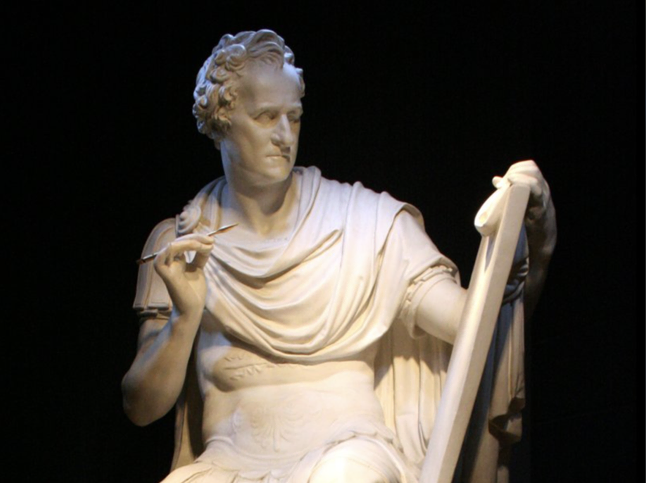
"...there are in America, no Kings, Princes, or Nobles...": Caesar, Cato, and Washington.
This exhibition examines the echoes of ancient Rome that shaped the revolutionary spirit of the budding United States and how conflicting ideals of freedom and bondage—inherited from Rome—are baked into America’s origins.
The People's Bicentennial
Open through September 20th
Hatcher Graduate Library
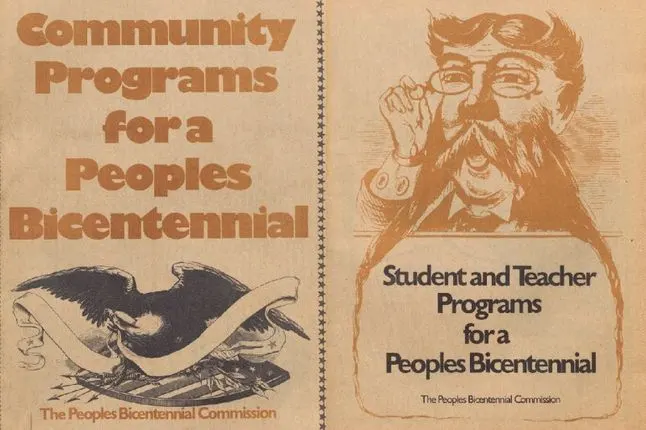
This selection of original artifacts documents the work of the People's Bicentennial Commission (PBC), which challenged the official, corporate-sponsored commemoration of the 1976 bicentennial. This year we celebrate the 250th anniversary of the signing of the Declaration of Independence.
Items on display are from the Joseph A. Labadie Collection, which documents social protest movements and radical history.
Who Counts? A History of Voting in America
September 11 - December 22
William L. Clements Library
Changes over the course of the nineteenth century in how Americans voted, from voice vote to public ballot box to private voting booth, also saw changes in the material culture that surrounded voting. Ballots and ballot boxes, campaign pins and ribbons, blank lists and pre-printed party tickets, lanterns and banners–the creative forces of the American print industry filled the country’s cities and small towns with the ephemera of electioneering.
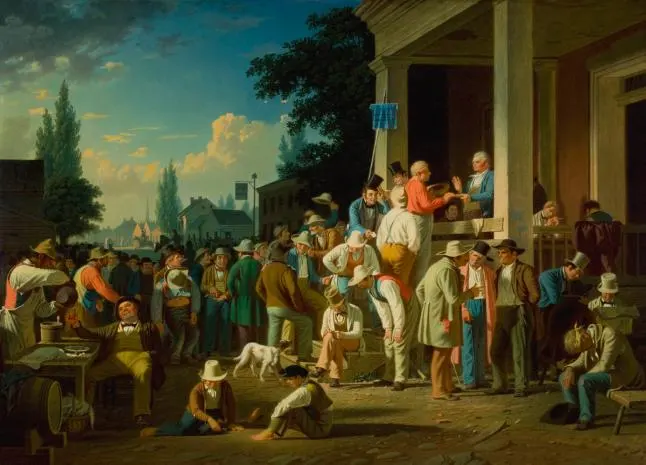
Photo Exhibition: Beacon of Democratic Resilience
Visual Truths and the Legacy of Korea's 5-18 Democratization Movement
September 18 - October 7
Duderstadt Center Gallery
Opening ceremony Friday, September 18 at 5:00 PM

'This is the Place' exhibition featuring photography from Anna Liminowicz
September 1 - October 30
Weiser Hall, Room 547
In This Is The Place, a project supported by the UN Refugee Agency (UNHCR), Anna Liminowicz asked refugees to show what, in Poland, reminds them of their home. These portraits and the personalized confessions her subjects handwrote in their native languages tell poignant stories about safety and hope.
Presented by: Copernicus Center for Polish Studies, International Institute, Weiser Center for Europe and Eurasia

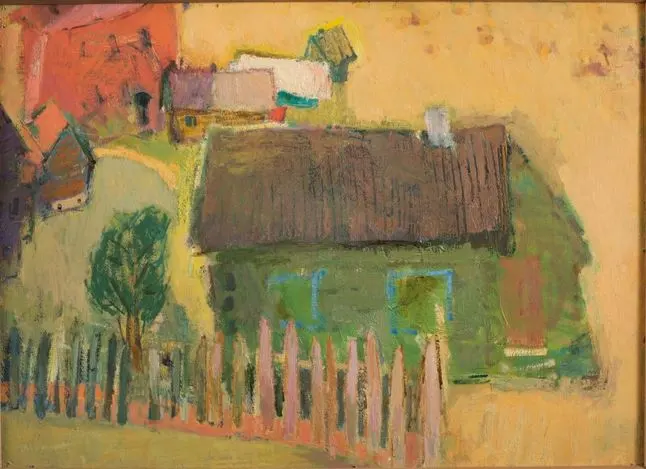
The Art of Memory: Paintings by Felix Lembersy
August 2026 - Ongoing
Weiser Hall, Room 1010
Felix Lembersky (1913-1970) was a painter, theater stage designer, teacher, and leader of artistic groups. He began his career within the Soviet Avant-Garde in Ukraine before studying realist painting in Leningrad (now Saint Petersburg). Throughout his life he worked across realist and modernist styles that fell outside of Soviet-mandated Socialist Realism. His Execution: Babyn Yar series (ca. 1944-52) is the earliest known artistic representation of Babyn Yar, a Holocaust massacre site in Kyiv. For political reasons, these paintings, along with his later nonconformist work, were barred from exhibition in the Soviet Union.
Presented by: Weiser Center for Europe and Eurasia and International Institute
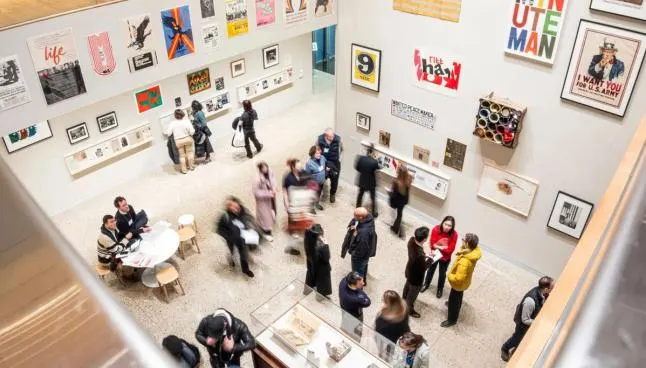
American Sampler: Activating the Archive
January 2026 - Ongoing
The Art, Language, and Legacy of Protest
UMMA Vertical Gallery
Guest Curator: Julie Ault, Artist
American Sampler: Activating the Archive looks back to a period when protest reshaped the nation. Curated by MacArthur Fellow Julie Ault in collaboration with the University of Michigan’s Labadie Collection of political dissent, this eighteen-month exhibition transforms UMMA’s towering Vertical Gallery into a living record of activism.